
May 7, 2026
Trying to narrow down Colorado Springs by ZIP code? You are not alone. For many buyers, ZIPs are the fastest way to make a big home search feel manageable, especially when you are relocating, comparing commute patterns, or deciding between suburban and rural settings. This guide will help you understand what the most talked-about Colorado Springs ZIP codes usually mean in real-world terms, where they help, where they fall short, and how to tour them more efficiently. Let’s dive in.
ZIP codes are a practical first filter. They let you quickly sort listings by broad area, which is especially useful in a market like Colorado Springs where north, south, and rural-edge living can feel very different.
At the same time, ZIP codes are not precise neighborhood maps. The U.S. Census Bureau explains that ZIP Codes are mail-delivery tools, and ZCTAs are only generalized map versions of those routes. For you as a buyer, that means a ZIP can guide your search, but it should not replace checking exact neighborhood location, school assignment by address, utility setup, or HOA details.
A smart way to search is by corridor and lifestyle pattern instead of by postal code alone. In Colorado Springs, buyers often focus on a few recognizable clusters: north-side suburban areas, the Broadmoor and Cheyenne Mountain area, and Black Forest on the eastern edge.
That approach makes the search easier. Instead of memorizing every ZIP in town, you can match each area to the kind of daily life you want, then drill down to specific homes and streets.
If you are searching 80920, you are usually looking at the Briargate side of Colorado Springs and the broader north-side suburban core. City pages place John Venezia Community Park at Briargate Parkway and Union Boulevard, and local zoning references also use Briargate as an active area label in this part of town.
For buyers, 80920 often means a more conventional suburban setting. It is commonly associated with planned neighborhoods, park access, and an amenity-oriented layout that appeals to buyers who want a north-side location with established suburban infrastructure.
In broad terms, 80920 tends to attract buyers who want:
This does not mean every block feels the same. It simply means 80920 is a useful shorthand if you want to start with a suburban Colorado Springs search.
80921 is often grouped with the north side, but it has a different feel from 80920. This ZIP is more closely tied to the Northgate area, the west side of I-25 at the North Gate exit, and the broader USAFA corridor.
City and planning documents point to ongoing growth and connectivity in this area. The True North Commons project near Northgate is planned for retail, office, hotel, conference, and visitor-center uses, while transportation planning around the Powers Boulevard Extension is intended to improve mobility between northeast Colorado Springs, I-25, Voyager Parkway, Highway 83, and the Flying Horse and Northgate area.
For you, that often translates to a newer-planned-development feel and a stronger commuter orientation. Roadway access tends to play a bigger role here than it does in older parts of the city.
It is also worth knowing that traffic can be part of the conversation. City materials note congestion at North Gate and Struthers as traffic moves between I-25 and Struthers Road, so drive routes matter when you are comparing homes in this area.
If you are drawn to scenery, established surroundings, and trail access, 80906 usually gets your attention quickly. Official local sources place The Broadmoor Hotel, Cheyenne Mountain Resort, and Broadmoor Valley Park in 80906, and North Cheyenne Cañon Park is nearby with changing elevations, remote trails, and limited cell service in the canyon.
This ZIP is often associated with the city’s established south and southwest lifestyle zone. Compared with the north-side growth corridors, 80906 tends to feel more tied to mountain access, resort-area amenities, and scenic settings.
In broad terms, buyers often look here for:
That does not mean every home is historic or high-end. It does mean 80906 is closely linked with some of Colorado Springs’ most recognizable south-side amenities.
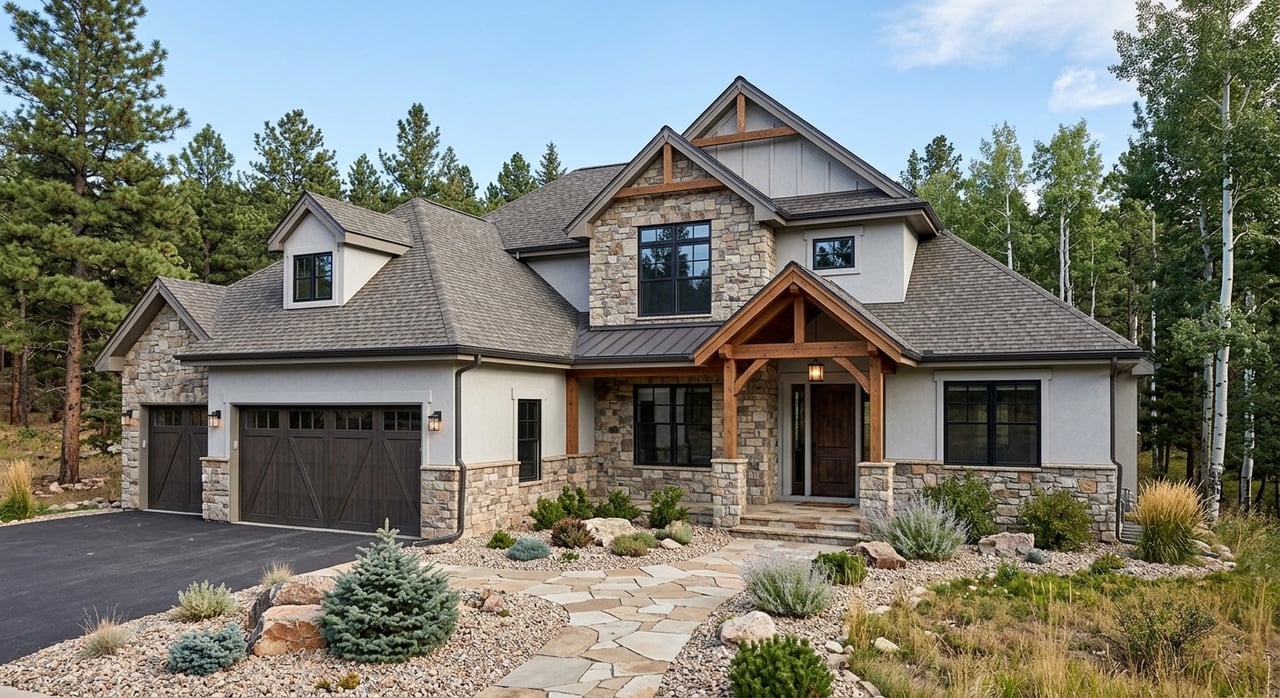
80908 is different from the city-style suburban ZIPs. El Paso County planning documents describe Black Forest as an unincorporated rural community with a rural-residential character, including low-density, large-lot development patterns.
For many buyers, that is exactly the appeal. If you want more land, more separation between homes, and a less typical subdivision layout, 80908 often belongs on your shortlist.
This is also the ZIP where property-specific due diligence becomes especially important. County filings for Black Forest-area development note that some properties are not served by a central water system, and that rural residential lots may rely on groundwater.
That means you should verify whether a home uses city utilities, a private well, septic, or a combination. In 80908, those details can have a bigger impact on your day-to-day ownership experience than they would in a more conventional subdivision.
The transportation picture is different here too. The city’s Black Forest Road corridor project notes substantial growth between Woodmen and Old Ranch, and identifies Black Forest Road as a principal arterial being widened to address future capacity needs.
In practical terms, 80908 often means more car-dependent touring, more attention to commute routes, and more value in mapping your typical weekly travel before you choose a home.
Two other ZIPs come up often in broader Colorado Springs searches: 80918 and 80907.
City parks pages place Cottonwood Creek, Dublin, and Keller park networks in 80918, which makes it a useful shorthand for a north-central area with a strong city-park footprint. Sondermann Park is located in 80907 on the west side and is described as a 97-acre natural park in a shallow valley, giving that ZIP a different kind of outdoor context.
These ZIPs may not be the first stop for every buyer, but they often become part of the conversation as your search expands.
ZIPs like 80920 and 80921 are shaped by Briargate, Northgate, I-25 access, planned parks, and ongoing roadway investment. As a result, buyers often associate them with planned subdivisions, newer-feeling streets, and amenity clusters.
If your priority is a suburban search with easier access to major travel routes, these ZIPs are often a logical place to begin.
80906 is more closely tied to Broadmoor and Cheyenne Mountain amenities, plus nearby trail access and scenic surroundings. Buyers who prefer that setting may be willing to trade some freeway convenience for a different daily feel.
If you are comparing north versus south, 80906 is often less about growth-corridor energy and more about established setting and outdoor access.
80908 stands apart because it is tied to large lots and Black Forest’s rural-residential pattern. If you want more space and a different pace, it can be a great fit, but it also calls for more attention to utility setup, lot characteristics, and drive times.
That trade-off matters. The right fit depends on whether you want suburban convenience, scenic south-side living, or more land on the rural edge.
One of the simplest ways to make your search more efficient is to group showings by corridor. Since ZIP codes are broad filters rather than exact neighborhood boundaries, touring this way helps you compare areas more naturally.
A practical weekend plan often looks like this:
This reduces backtracking and gives you a better read on each area’s rhythm, roads, and setting.
Not exactly. It is a useful shorthand, but ZIP codes are not precise neighborhood boundaries.
That means some buyers use 80920 to start a Briargate-style search, then narrow by exact location, subdivision, and property features.
In broad terms, 80920 is more closely tied to Briargate and a north-side suburban pattern. 80921 is more connected to Northgate, USAFA-area growth, and commuter-oriented access.
If you are choosing between them, think about whether you prefer a more classic suburban search or a growth-corridor location tied closely to I-25 and Northgate routes.
No. ZIP codes are not the same as school boundaries.
If school assignment matters to your search, it should always be verified by exact property address rather than by ZIP code alone.
The best use of a ZIP code guide is to speed up your first round of decisions. It helps you sort Colorado Springs into manageable buckets so you can focus your time on the areas that match your goals.
From there, the real work is in the details: exact address, road access, utility setup, lot size, and how a home fits your daily routine. If you want help comparing 80920, 80921, 80906, 80908, or other Colorado Springs areas, the team at Gary Kirkpatrick can help you narrow your search with local, practical guidance.
Stay up to date on the latest real estate trends.
Gary and his team focus on his commitment to providing their clients with first class, 5 star service, before, during and after the transaction.
Please feel free to reach out to us anytime if you have any questions regarding real estate or homeownership.
KIRKPATRICK ASSOCIATES, LLC
Broker Associate / REALTOR®
(719) 982-2800
Broker Associate / REALTOR®
(779) 245-2964
Operations Manager
(719) 822-4171
1915 Democracy Point
Colorado Springs, CO 80908