Buying or selling a home in Broadmoor and hearing a lot about radon? You are not alone. Along the Front Range, radon is a routine part of smart homeownership and due diligence. In this guide, you will learn why radon matters in Broadmoor, how testing works during a Colorado Springs real estate transaction, what your results mean, and the practical steps to mitigate if needed. Let’s dive in.
Why radon matters in Broadmoor
El Paso County, which includes Broadmoor, is classified by the U.S. Environmental Protection Agency as an EPA Zone 1 area. Zone 1 areas have the highest potential for elevated indoor radon. Local geology in Colorado, including uranium-bearing rocks and soils, makes radon a common issue that can vary from home to home.
The EPA action level for radon is 4.0 pCi/L. If your short-term or long-term test shows levels at or above 4.0 pCi/L, the EPA recommends mitigation. Public health guidance also suggests considering mitigation for persistent results between 2.0 and 4.0 pCi/L, since no exposure is entirely risk-free. Long-term testing, which runs 90 days to a year, provides the best picture of average exposure because radon fluctuates with weather and season. You can learn more from the EPA radon overview, the EPA radon zone map, and Colorado’s CDPHE Radon Program. El Paso County also offers local radon resources. (References: [turn2search0] [turn2search1])
Radon tests you can use
You have two main testing timelines: short-term for quick decisions and long-term for accuracy.
Short-term tests during inspections
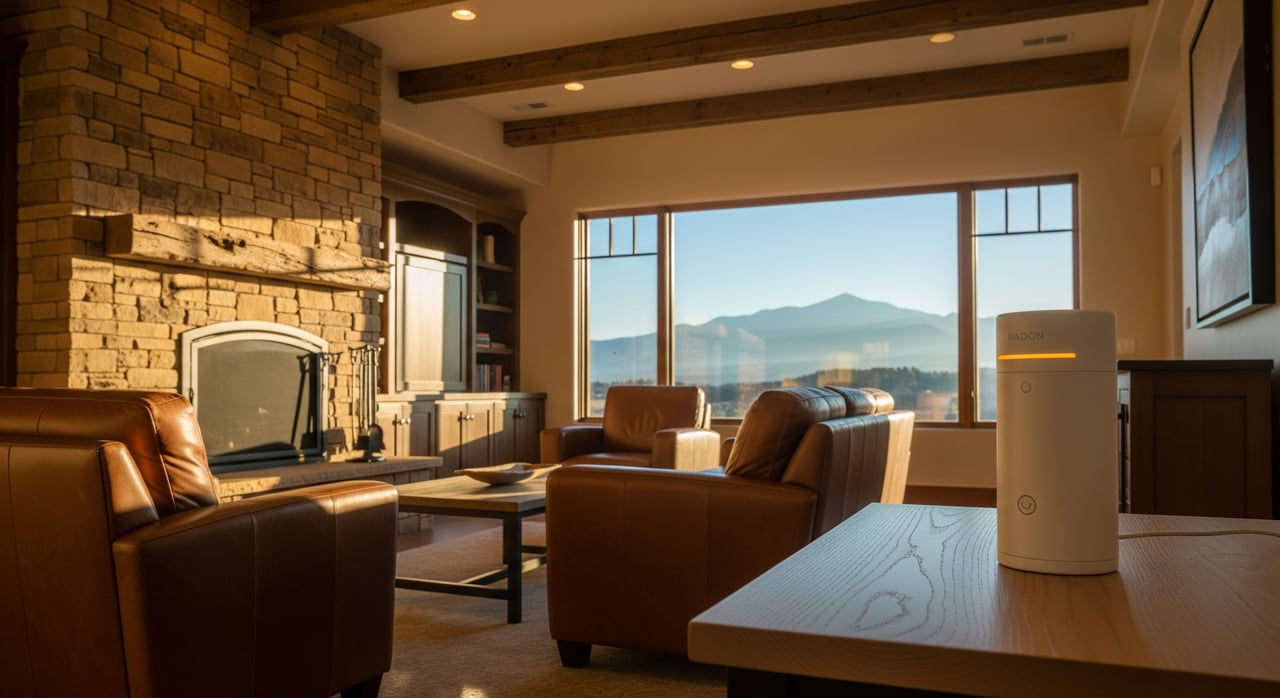
Short-term tests typically run 2 to 7 days and are common during the inspection period. Options include charcoal canisters, electret ion chambers, and continuous radon monitors. In a real estate setting, a certified professional often places a continuous radon monitor that records hourly readings, provides a clear report, and documents testing conditions and timing.
Long-term tests for accuracy
Long-term tests run 90 days to 1 year and better capture seasonal changes. If your short-term result lands between 2.0 and 3.9 pCi/L, follow up with a long-term test to confirm your average. Long-term results are helpful for families planning to stay in the home for years and for sellers who want to demonstrate stable, low readings to buyers.
Continuous monitors for clarity
Continuous radon monitors are electronic devices that log data throughout the test. They are useful for quick, high-quality short-term tests, for post-mitigation verification, and when you want time-stamped insights into hourly swings. Ask your tester for a device report that includes start and end times, serial numbers, and notes on testing conditions.
Set up the test correctly
Good testing is about good setup. Follow these basics for credible results:
- Maintain closed-house conditions for at least 12 hours before and during a short-term test. Keep windows and exterior doors closed, except for normal entry and exit. HVAC can run normally.
- Test the lowest level of the home that is regularly used, such as a finished basement or lower-level family room. If the lowest level is unfinished and not used, test the lowest lived-in level.
- Place the device at typical breathing height, roughly 2 to 6 feet above the floor, on an interior location away from drafts, windows, exterior doors, heating vents, and high humidity or heat sources.
- Document the start time, end time, device ID, and any deviations from protocol. For a real estate transaction, professional documentation helps both parties make clear decisions.
Make sense of your results
Use these ranges to plan next steps:
- Below 2.0 pCi/L: Low. Mitigation is not generally recommended. Consider periodic re-testing or a long-term test if you want added assurance.
- 2.0 to 3.9 pCi/L: Elevated enough to consider mitigation, especially if anyone in the household is at higher risk. Confirm with a long-term test or a follow-up short-term test.
- 4.0 pCi/L and above: This meets the EPA action level. Plan to mitigate with a qualified contractor and verify performance with a post-mitigation test. Review the EPA guidance on action levels if you want more detail.
Radon mitigation basics
Radon can be managed effectively. Most Broadmoor homes can reach levels below 4.0 pCi/L, and many achieve results below 2.0 pCi/L after mitigation.
Common systems
- Active soil depressurization (ASD): The most common and effective method for basements and slab-on-grade foundations. A PVC vent pipe and in-line fan draw soil gases from beneath the slab and vent them above the roofline.
- Crawl space solutions: Encapsulation with a sealed membrane and sub-membrane depressurization is typical. Some ventilated crawl spaces may also benefit from improved ventilation and sealing.
- Sealing cracks and openings: Helpful as a supporting measure, but it is rarely sufficient by itself.
- Sump cover integration: Many systems integrate with existing sumps to reduce soil gas entry.
Time and cost expectations
- Installation time: Usually 1 to 3 days, depending on the home’s size and design.
- Typical cost range: About $800 to $2,500+ in the U.S. Actual costs vary with foundation type, access, and local labor. Complex homes can cost more, so it is best to gather local bids.
- Ongoing costs: The fan uses modest electricity and may need replacement after several years. Ask about workmanship and fan warranties.
Choose a qualified contractor
Select professionals who follow national standards. Look for NRPP-certified pros and ask whether they follow AARST testing and mitigation standards. In Colorado, the CDPHE Radon Program and El Paso County Public Health offer guidance and resources. After installation, complete a post-mitigation test, typically with a continuous monitor for 48 to 72 hours or a long-term device, and keep all documentation.
Broadmoor transaction playbook
Here is how radon typically fits into a Broadmoor real estate timeline:
- Pre-listing testing: Sellers can test and, if needed, mitigate before listing. Documented low readings help reduce friction and build buyer confidence.
- Inspection period: Buyers usually order a short-term test. If results are elevated, you can negotiate repairs, mitigation, or credits. Consider confirming elevated results with a follow-up test or continuous monitor.
- Contract details: Work with your Colorado real estate agent or attorney to structure contingency language. Common items include a radon-testing window, acceptable test devices and labs, who pays for mitigation, a cost cap, the requirement for a certified mitigator, and a post-mitigation verification test.
- Documentation to request: Keep test reports, lab or tester certifications, chain-of-custody details, mitigation invoices, system design notes, as-built photos, warranty, and post-mitigation results.
Quick checklist for Broadmoor buyers and sellers
- Test every Broadmoor home, regardless of age or foundation type.
- Use certified professionals and accredited labs for real estate tests.
- Follow closed-house protocol for at least 12 hours before and during a short-term test.
- If results are 2.0–3.9 pCi/L, confirm with a long-term or follow-up test and consider mitigation.
- If results are 4.0 pCi/L or higher, plan to mitigate and verify with a post-test.
- Negotiate clear contract terms on timelines, responsibilities, and documentation.
- Keep all reports, certifications, and warranties for your records and future resale.
We handle the details so you do not have to
Managing radon in a transaction is about clear steps and good paperwork. We coordinate certified radon testers and mitigators, keep the testing window on track, and make sure you have the right reports for negotiation and peace of mind. Our design and construction background also helps plan clean system routes that respect your home’s aesthetics. If you are preparing to buy or sell in Broadmoor, reach out to Unknown Company. We will help you test, interpret results, and move forward with confidence.
FAQs
What is radon and why is it common in Broadmoor?
- Radon is a naturally occurring radioactive gas that enters homes from soil; El Paso County’s geology places Broadmoor in an EPA Zone 1 high-potential area, so testing every home is recommended.
What radon level is considered unsafe for a Colorado Springs home?
- No level is risk-free, but the EPA recommends mitigation at 4.0 pCi/L or higher and considering action between 2.0 and 4.0 pCi/L based on long-term exposure.
How long does radon testing take during an inspection?
- Short-term tests usually run 2 to 7 days, and continuous monitors can provide hourly data; long-term tests run 90 days to 1 year for a more accurate average.
Who should I hire for radon testing and mitigation?
- Choose state-recognized or nationally certified professionals, such as NRPP-certified testers and mitigators, and ask for documented reports and chain-of-custody.
How much does radon mitigation cost in Broadmoor?
- Many systems fall in the $800 to $2,500+ range, with most installations completed in 1 to 3 days; request local bids for precise pricing.
Will a mitigation system hurt my resale value?
- A documented system with post-mitigation test results typically reassures buyers; keep all reports, certifications, and warranties for future disclosure.